What is altitude sickness, and how does helicopter evacuation assist in its treatment? Altitude sickness is a condition that occurs when a person ascends to high altitude without taking proper rest. Altitude sickness is a common problem that requires quick action. It only occurs when the air contains less oxygen, and when your body doesn't get enough time to adapt to the atmosphere. That means breathing in the same amount of air gets you less oxygen than at a lower altitude. It commonly affects people at elevations above 2,500 m.
Altitude sickness comes in three types, from mild to very dangerous:
Acute Mountain Sickness (AMS): This is the mildest and most common type. It feels like a bad hangover or the flu, with headaches and tiredness.
High Altitude Pulmonary Edema (HAPE): This type affects your lungs. Fluid builds up inside them, making it very hard to breathe. This is a medical emergency. Even though it's not the "worst" type, it can kill you very quickly if you don't get help.
High Altitude Cerebral Edema (HACE): This is the most severe type. It affects your brain, causing it to swell. This is extremely dangerous and you need emergency care right away to survive.
The effects of high altitude on the body are wide-ranging, and their intensity often depends on the elevation gained. Most signs of acute mountain sickness tend to emerge within the initial 24 hours after ascending to a significant height.
The common symptoms are:
Headache
Dizziness
Nausea or vomiting
Fatigue or weakness
Loss of appetite
Difficulty sleeping
Shortness of breath
What are risk factors for altitude sickness?
The risk factors for altitude sickness are mainly related to the altitude reached and the speed of ascent.
Higher altitude: The higher you go, the greater your risk for altitude sickness
Speed of ascent: Getting to a higher altitude quickly increases your risk of developing altitude sickness. People who fly to high altitude rather than walk, hike, or drive are more likely to develop it.
Alcohol and drug use: Drinking alcohol or using certain medications, especially sedatives, can greatly increase the chances of developing altitude sickness.
Heli Evacuation Assists in Its Treatment
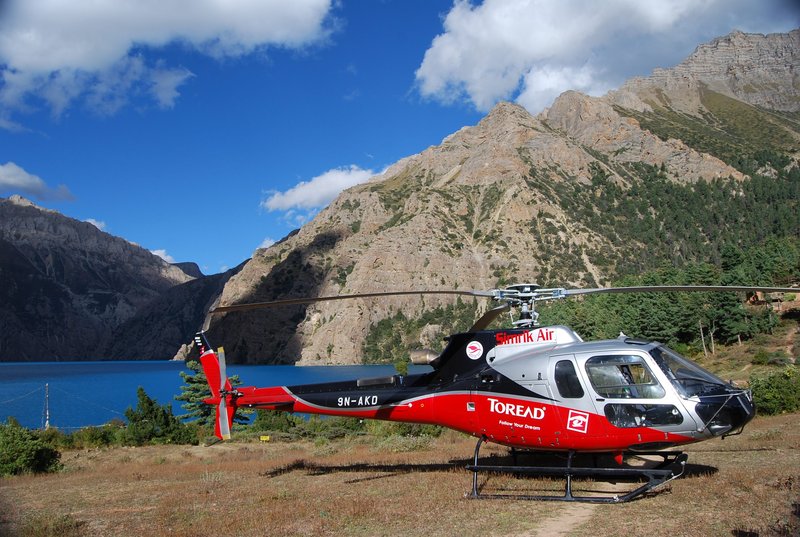
Helicopter evacuation plays a vital role in treating altitude sickness by quickly transporting patients to lower elevations, where there is more oxygen in the air. Descending to a lower altitude is the most effective treatment for moderate to severe cases because it helps relieve symptoms and prevents the condition from becoming more serious. In addition, helicopters enable patients to receive medical care, oxygen therapy, and emergency treatment much faster, particularly in remote mountain regions where road access is limited or ground evacuation may take too long.